Bicycles in 1891
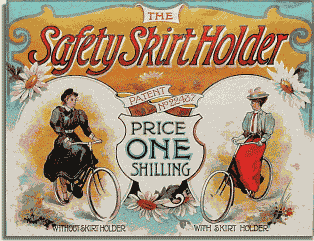
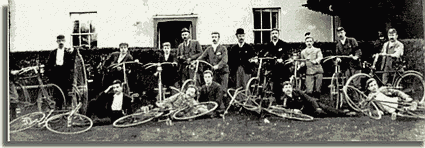
Bicycles had been around for many years prior to 1891, but were still a very expensive item for the average person to buy. For example, a bicycle cost £6 - £9, when the annual wage of a rising professional was £700 (see the Victorian Web for information on Victorian wages). The "Sharp Shooter" advertised above cost £12 because of the new technology of pneumatic tyres (see below).
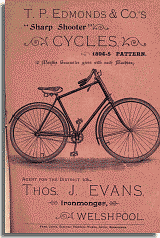
Advert for the "Sharp Shooter" cycle
from Welshpool Horticultural Society
Show Programme, 1894
Powysland Museum and Montgomery Canal Centre
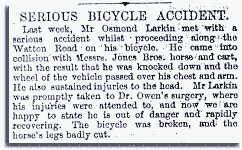
Serious Bicycle Accident,
as reported in the Brecon and Radnor Express
Llandrindod Wells Library
SERIOUS BICYCLE ACCIDENT Last week, Mr Osmond Larkin met with a serious accident whilst proceeding along the Watton Road on his bicycle. He came into collision with Messrs. Jones Bros. horse and cart, with the result that he was knocked down and the wheel of the vehicle passed over his chest and arm. He also sustained injuries to the head. Mr Larkin was promptly taken to Dr. Owen's surgery, where his injuries were attended to, and now we are happy to state he is out of danger and rapidly recovering. The bicycle was broken, and the horse's legs badly cut.
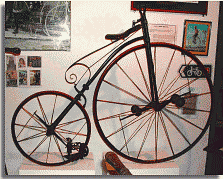
'Aerial' ordinary cycle
National Cycle Museum, Llandrindod Wells