Health Care
Taking
the Waters: Saline and Chalybeate Springs
The saline springs at the Old Pump House and the Rock Park Pump house seemed
to derive their principal benefits from their purgative action:
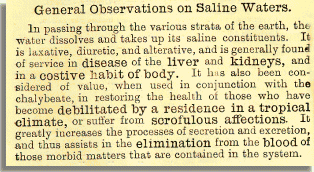
General Observations
on Saline Waters.
In passing through the various strata of the earth,
the water dissolves and takes up its saline constituents. It is laxative,
diuretic, and alterative, and is generally found of service in disease
of the liver and kidneys, and in a costive habit of body. It has also
been considered of value when used in conjunction with the chalybeate,
in restoring the health of those who have become debilitated by a residence
in a tropical climate, or suffer from
scrofulous affections. It greatly increases the processes of secretion
and excretion, and thus assists in the elimination from the blood of those
morbid matters that are contained in the system.

The last type of spring
was the Chalybeate Spring in Rock Park
which seems to have been rich in iron. However, Dr Bowen Davies was emphatic
that it should only be taken in moderation, and with an interval of at
least 15 minutes between doses.
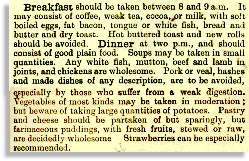
Breakfast
should be taken between 8 and 9 a.m. It may consist of coffee, weak tea,
cocoa, or milk, with soft boiled eggs, fat bacon, tongue or white fish,
bread and butter and dry toast. Hot buttered toast and new rolls should
be avoided. Dinner at two p.m., and should consist of good plain food.
Soups may be taken in small quantities. Any white fish, mutton, beef and
lamb in joints, and chickens are wholesome. Pork or veal, hashes and made
dishes of any description, are to be avoided, especially by those who
suffer from a weak digestion. Vegetables of most kinds may be
taken in moderation; but beware of taking large quantities of potatoes.
Pastry and cheese should be partaken of but sparingly, but farinaceous
puddings, with fresh fruits, stewed or raw, are decidedly wholesome. Strawberries
can be especially recommended.
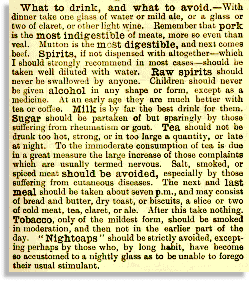
What
to drink, and what to avoid. -
With dinner take one glass of water or mild ale, or a glass or two of
claret, or other light wine. Remember that pork is the most indigestible
of meats, more so even that veal. Mutton is the most digestible, and next
comes beef. Spirits, if not dispenses with altogether - which I should
strongly recommend in most cases - should be taken well diluted with water.
Raw spirits should never be swallowed by anyone. Children should never
be given alcohol in any shape or form, except as a medicine. At an early
age they are much better with tea or coffee. Milk is by far the best drink
for them. Sugar should be partaken of but sparingly by those suffering
from rheumatism or gout. Tea should not be drunk too hot, strong, or in
too large a quantity, or late at night. To the immoderate consumption
of tea is due in a great measure the large increase of those complaints
which are usually termed nervous.
Salt, smoked or spiced meat should be avoided, especially by those suffering
from cutaneous diseases. The next and last meal should be taken about
seven p.m., and may consist of bread and butter, dry toast, or biscuits,
a slice or two of cold meat, tea, claret, or ale. After this take nothing.
Tobacco, only of the mildest form, should be smoked in moderation, and
then not in the earlier part of the day. "Nightcaps" should
be strictly avoided, excepting perhaps by those who, by long habit, have
become so accustomed to a nightly glass as to be unable to forego their
usual stimulant.
Sound
and Refreshing Sleep. - Retire before 10 o'clock to seek that
repose which will soon be found in sound and refreshing sleep, if a proper
amount of exercise in this bracing and exhilarating mountain air has been
taken during the day."
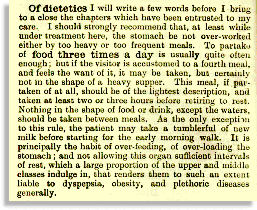
Of
dietetics I will write a few words before I bring to a close
the chapters which have been entrusted to my care. I should strongly recommend
that, at least while under treatment here, the stomach be not over-worked
either by too heavy or too frequent meals. To partake of food three times
a day is usually quite often enough; but if the visitor is accustomed
to a fourth meal, and feels the want of it, it may be taken, but certainly
not in the shape of a heavy supper. This meal, if partaken of at all,
should be of the lightest description, and taken at least two or three
hours before retiring to rest. Nothing in the shape of food or drink,
except the waters, should be taken between meals. As the only exception
to this rule, the patient may take a tumblerful of new milk before starting
for the early morning walk. It is principally the habit of over-feeding,
of over-loading the stomach; and not allowing this organ sufficient intervals
of rest, which a large proportion of the upper and middle classes indulge
in, that renders them to such an extent liable to dyspepsia, obesity,
and plethoric diseases generally.